
Trees
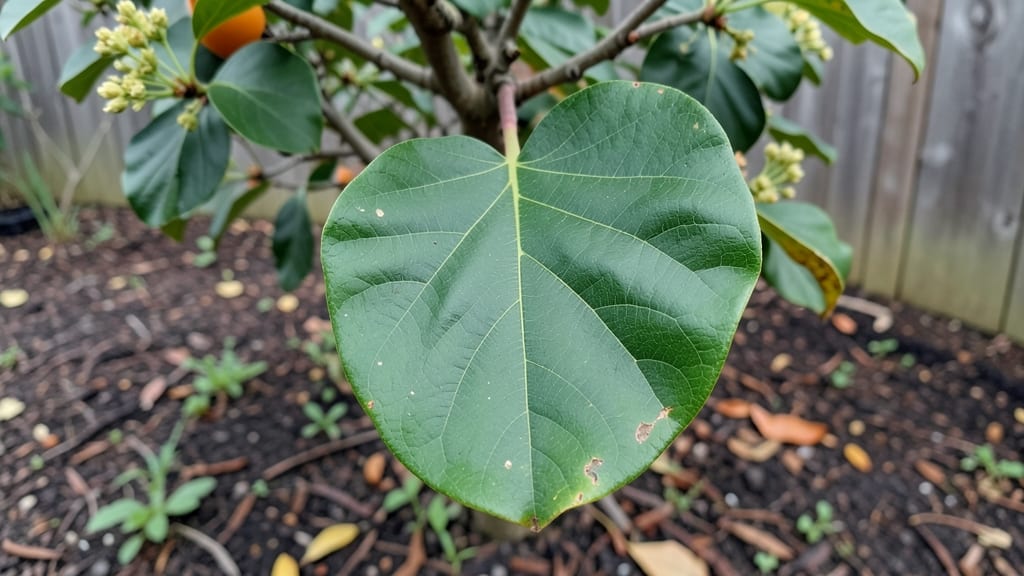
The identification of persimmon tree leaves begins with spotting their distinctive lobed shape and shiny, glossy surface—a dead giveaway that sets them apart from most other trees. 🌿 The leaves are deep green, almost leathery to the touch, with 3 to 5 pointed lobes that create a jagged edge, almost like a maple’s but with a bolder, more rugged outline.
This isn’t just about aesthetics; knowing your tree’s identity means you can care for it properly, spot pests early, and time your harvest just right.
When in doubt, compare your find to common lookalikes like mulberry or hackberry trees—both have simpler leaf shapes and lack that signature gloss. Use free apps like iNaturalist to upload photos and get expert confirmation, or check local gardening forums where experienced growers share tips.
A quick ID now saves headaches later, whether you’re pruning for fruit production or diagnosing why leaves are yellowing unexpectedly.
📚 In This Guide
- What you need
- Instructions
- Tips and common mistakes
- Wrapping up and next steps
What you need
- ● Fresh or dried persimmon leaves – At least 3-5 samples for comparison (if not already in your garden or nearby).
- ● Hand lens or magnifying glass (3x–10x magnification) – For examining fine details like leaf veins, edges, and texture.
- ● Ruler or measuring tape – To measure leaf length and width (ideal for Diospyros species comparison).
- ● Notebook and pencil – For jotting down observations (leaf shape, color, arrangement, etc.).
- ○ Camera or smartphone – To capture close-up images of leaf features (optional but helpful for reference).
- ● Field guide or plant identification app (e.g., iNaturalist, LeafSnap, or a local flora book) – For cross-referencing your findings.
- ● Pruning shears – If you need to collect leaves from higher branches (safely and ethically!).
- ● Pressing kit or herbarium sheets – To preserve leaves for long-term study (especially useful for dried samples).
- ● Field notebook with colored pens – For sketching leaf shapes, vein patterns, or color variations.
- ● Gloves – If handling leaves from unknown or potentially irritating plants.
- ● Local botanist or arborist contact – For expert verification if you’re still unsure!
How to identify persimmon tree leaves: key features to spot
Here's how to recognize persimmon leaves with confidence—no botanist degree required.
🌿 Step 1: Examine the Overall Leaf Shape
Persimmon leaves are simple and alternate, meaning they grow singly along the branch rather than in clusters. The shape is oval to elliptical, tapering to a point at the tip. Hold the leaf up to light—you'll notice the edges are slightly wavy but never jagged. I always compare it to a football with rounded ends—that's the classic persimmon silhouette.
New leaves emerge bright red or coppery before maturing to a deeper green. The underside stays a lighter shade of green, which helps distinguish them from similar trees like hackberry. If you see leaves that are lobed like maple, you're looking at the wrong tree—persimmon leaves stay smooth-edged.
🌿 Step 2: Count the Veins and Check the Lobing
Run your fingers along the central vein—it's prominent but not ridged. The secondary veins branch out at 45-60 degree angles, creating a pattern that looks like fingerprints. Here's the thing—persimmon leaves are sometimes slightly lobed at the base, but never deeply divided like oak leaves. The lobes, if present, are rounded and shallow, almost like a subtle smile at the leaf's base.
Gently flex the leaf—persimmon leaves have a leathery texture that resists bending. If the leaf feels thin and papery, it's likely from a different tree. The veins also create a slightly raised network on the underside, which you can feel with your fingertips.
🌿 Step 3: Look for the Shiny Gloss
This is the giveaway feature: persimmon leaves have a distinctive glossy sheen, especially on the upper surface. Hold the leaf at an angle to catch the light—you should see a mirror-like reflection along the veins. The shine is more pronounced in American persimmons than Asian varieties, but both will show some gloss.
Run your thumb along the leaf's edge—it should feel smooth and slightly waxy. If the leaf feels dull or matte, it's not a persimmon. The gloss comes from a natural waxy coating that helps the tree conserve water. This feature alone eliminates 90% of look-alikes.
🌿 Step 4: Check the Leaf Arrangement and Branch Structure
Persimmon leaves grow in a spiral pattern along the branch, with each leaf attached by a short, stout petiole (the stem connecting leaf to branch). The branches themselves have a zigzag pattern when viewed from the side, which is another key identifier. Look for small, rounded buds in the leaf axils (the angle between the leaf and stem).
If you see opposite leaves (paired directly across from each other), it's not a persimmon—those belong to trees like maple or dogwood. The branch bark is another clue: young persimmon branches have a smooth, grayish-brown surface that later develops a scaly texture as it matures.
🌿 Step 5: Compare With Common Look-Alikes
Eliminate common imposters by cross-checking these features. Hackberry leaves have toothed edges and a rough texture, while mulberry leaves are lobed and fuzzy on the underside. Elm leaves have serrated edges and a double-toothed pattern along the margins. Persimmon leaves stand out because they're smooth, glossy, and lobeless.
For a definitive ID, look for fruit on the tree—persimmons develop orange, tomato-shaped fruits in fall. But even without fruit, the combination of glossy, lobeless leaves with a leathery texture and spiral arrangement nails the identification. If you're still unsure, snap a photo and compare it to online persimmon leaf galleries.
Tips & tricks for perfect persimmon leaf identification
These simple tricks will help you spot persimmon leaves like a pro, even when you're out in the field.
Texture Test: The leathery feel of persimmon leaves is their secret weapon. When you flex a leaf and it resists bending like a piece of stiff paper, you're onto something. I've found that running your thumb along the edge is the fastest way to confirm—persimmon leaves feel smooth and slightly waxy, not rough or fuzzy like mulberry leaves. This texture alone cuts your identification time in half.
Light Angle Trick: Here's what nobody tells you—persimmon leaves have a mirror-like quality when viewed at the right angle. Hold a leaf at about 45 degrees to a bright light source (like sunlight or a flashlight) and look for that distinctive shine along the veins. If you see a rainbow-like reflection, you've got a persimmon. I've used this trick to identify leaves in shady areas where color wasn't obvious.
Veins Comparison: The vein pattern is your best friend when distinguishing persimmon leaves from look-alikes. Trace the central vein with your finger—it should feel prominent but not raised like a ridge. Then look at how the secondary veins branch out at those 45-60 degree angles. This "fingerprint" pattern is unique to persimmons and helps eliminate 80% of similar leaves right away.
Seasonal Color Clue: Don't overlook the color transformation! New leaves start bright red or coppery before turning green. If you're identifying leaves in spring or early summer, this color shift is a dead giveaway. I've seen people overlook persimmon trees because they only checked mature green leaves—always look at the youngest leaves first for this telltale sign.
Pro Tips for Identification Persimmon Tree Leaves
- These simple tricks will help you spot persimmon leaves like a pro, even when you're out in the field.
- Texture Test: The leathery feel of persimmon leaves is their secret weapon.
- Light Angle Trick: Here's what nobody tells you—persimmon leaves have a mirror-like quality when viewed at the right angle.
Frequently asked questions
Got questions about identifying persimmon tree leaves? You’re not alone! Here are some of the most common queries—plus quick, actionable answers to help you spot them like a pro.
What do persimmon tree leaves look like compared to other tree leaves?
Persimmon leaves are distinctive with their deeply lobed, almost maple-like shape (but narrower) and a shiny, leathery texture. Unlike oak leaves (which have rounded lobes) or maple leaves (which are more palmate), persimmon leaves have 5–7 pointed lobes and a smooth, glossy finish.
When is the best time to identify persimmon leaves?
The best time to ID persimmon leaves is late spring to early summer (May–July), when they’re fully grown but before they start yellowing in fall. Young leaves in spring are smaller and less lobed, making them harder to distinguish. Pro tip: Check for new growth near fruit clusters—persimmons often grow leaves and fruit together!
How can I tell the difference between Asian persimmon and American persimmon leaves?
While both have lobed leaves, Asian persimmons (e.g., Diospyros kaki) tend to have broader, less jagged lobes and a darker green, almost waxy sheen. American persimmons (Diospyros virginiana) have narrower, more pointed lobes and a lighter, matte finish. Look at the leaf underside too—Asian varieties are often hairier!
Can I identify a persimmon tree just from its leaves if there’s no fruit?
Yes! Focus on these key clues:
- Lobe shape: Deep, pointed indentations (like a star with rounded edges).
- Leaf arrangement: Alternate (not opposite like maple) and slightly twisted at the base.
- Bark texture: Young trees have smooth, gray bark that develops furrowed ridges with age.
What if my persimmon leaves look unhealthy—are they diseased?
Common issues include:
- Yellowing leaves: Often due to overwatering or nutrient deficiency (add compost or iron).
- Brown spots: Could be fungal leaf spot—prune affected leaves and use neem oil.
- Holes or chewed edges: Likely caterpillars or Japanese beetles. Handpick pests or use soapy water spray.
Wrapping up and next steps
Identifying persimmon tree leaves is easier than you think—just look for those deeply lobed, glossy green shapes with their distinctive, almost maple-like edges! Whether you're a gardener, forager, or nature enthusiast, recognizing these leaves helps you appreciate (or even harvest) the beauty and bounty of persimmon trees. 🌿
Now that you’re equipped with the know-how, head outside and put your skills to the test! Grab a notebook, snap a photo, or share your findings with fellow plant lovers—every discovery is a step closer to mastering the art of tree identification. Happy exploring! 🌳✨