
How To
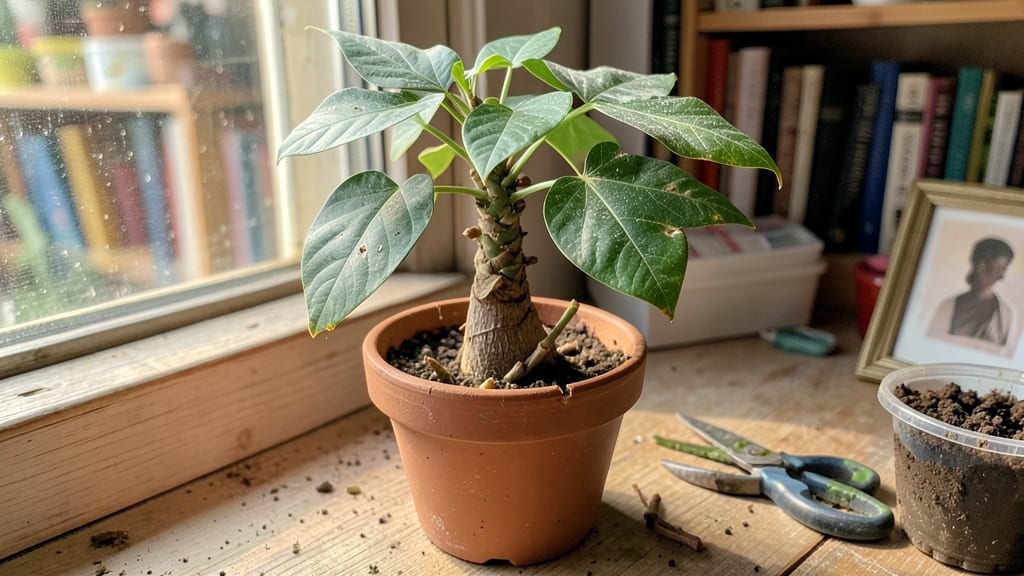
Pruning a money tree transforms its scraggly branches into a full, lush canopy—just four strategic cuts make all the difference. 🌿 I’ve pruned mine every spring for years, and the results speak for themselves: thicker foliage, faster growth, and even new plants from those cuttings.
The key is timing, technique, and knowing when to stop before you strip the plant bare.
Spring or early summer is prime time, when new growth is just starting. Grab sharp pruning shears and clean scissors, then target leggy stems or branches growing inward—cut just above a leaf node where new shoots will sprout.
Avoid over-pruning: never remove more than a third of the plant at once, or you’ll shock it into dormancy. With these simple steps, your money tree will reward you with bushier branches and even propagation material.
📚 In This Guide
- What you need
- Instructions
- Tips and common mistakes
- Wrapping up and next steps
What you need
- ● Sharp pruning shears – Bypass pruners (4-6 inch blades) for clean cuts on stems up to ½ inch thick.
- ● Sterilized alcohol wipes – 70% isopropyl alcohol to disinfect tools and cuts (1 pack).
- ○ Horticultural rubbing alcohol (optional but recommended) – For sealing larger cuts (small bottle, ~4 oz).
- ● Glove – A pair of lightweight gardening gloves to protect your hands from sap and thorns.
- ● Small container or tray – To collect pruned branches for composting or propagation.
- ● Water spray bottle – For misting cuts to encourage faster healing.
- ● Rooting hormone – To boost success if you’re propagating cuttings (gel or powder form).
- ● Small pots with drainage – 4-6 inch pots for propagating new plants from cuttings.
- ● Cactus/succulent soil mix – Well-draining soil for repotting propagated cuttings.
- ● Plant food or fertilizer – A balanced liquid fertilizer (e.g., 10-10-10) to give your money tree a post-prune boost.
- ● Notebook & pen – To jot down notes on growth patterns or pruning dates.
How to prune a money tree: four strategic cuts for lush growth
Here’s the straightforward method I use to keep my money tree full, healthy, and thriving—no guesswork involved.
✂️ Step 1: Identify the Right Time to Prune
Prune your money tree in early spring when new growth begins. This timing ensures your plant has energy to recover before summer heat stress. You’ll know it’s ready when you see fresh, vibrant leaves emerging from the top. Avoid pruning in fall or winter—your plant needs all its resources stored for dormancy.
If your tree looks leggy or sparse, don’t wait for spring. Light pruning to encourage branching can happen anytime, but major cuts should follow the seasonal rule. I always check for soft, flexible new growth—that’s your green light to prune.
🌿 Step 2: Sterilize Tools and Locate Growth Points
Use sharp, clean pruning shears to avoid tearing leaves or spreading disease. Wipe the blades with rubbing alcohol before and after each cut. Focus on nodes—the small bumps where leaves and branches meet. These are where new growth will sprout.
Count the leaves from the bottom up. The fourth or fifth leaf node from the top is your target for the first cut. This encourages fuller growth lower on the stem. If your tree is tall and bare at the bottom, make cuts just above these nodes to promote branching.
✂️ Step 3: Make the First Cut to Encourage Branching
Cut just above the fourth or fifth leaf node from the top, angling the blade slightly downward. This angle helps water run off and prevents rot. You’ll be removing the top portion of the stem, but don’t worry—this stimulates new side shoots to form at the remaining nodes.
After the first cut, step back and assess. If your tree is still too tall, repeat the process on the new top section. I’ve found that two or three strategic cuts per pruning session keep the tree lush without shocking it. Watch for tiny buds forming at the nodes within 2-3 weeks—that’s your sign it’s working.
🌱 Step 4: Prune Leggy or Overgrown Branches
Look for branches that are long, thin, or growing inward. These compete for light and weaken the tree’s structure. Cut these back to a node where a healthy leaf or bud is growing outward. Avoid "heading back" (cutting into old wood)—always prune to a node with growth potential.
If a branch is completely bare or dead, remove it entirely by cutting at the base. Healthy branches should have at least two or three leaves and feel firm to the touch. After pruning, wipe any sap on your fingers with a damp cloth—it’s sticky and can damage surfaces.
💧 Step 5: Care for Your Tree Post-Pruning
Water your money tree lightly the day after pruning to help it recover. Avoid heavy watering for 3-5 days—this prevents overhydration while roots adjust. Place the tree in bright, indirect light for a week to reduce stress. You’ll notice new leaves unfurling within 4-6 weeks if everything’s on track.
Fertilize with a balanced liquid fertilizer (like 10-10-10) two weeks after pruning to support regrowth. I dilute it to half-strength the first time to avoid burning tender new shoots. Keep an eye out for yellowing leaves—that’s often a sign of overwatering or fertilizer shock, not pruning failure.
Tips & tricks for pruning a money tree
Here's what nobody tells you about pruning a money tree—these are the little details that make all the difference between a tree that just survives and one that thrives.
Timing is Everything: Early spring is your golden window for major pruning because that's when your money tree naturally gears up for growth. I've learned this the hard way—pruning in late fall or winter can shock your tree when it's already conserving energy. If you absolutely must prune outside of spring, wait until you see those soft, new leaves pushing through, even if it's not the ideal season. That's your plant's way of saying "I'm ready!"
The Node Secret: Those little bumps where leaves meet the stem are called nodes, and they're where all the magic happens. When you make your cuts just above the fourth or fifth node from the top, you're essentially telling your tree, "Hey, grow here instead!" I always count leaves from the bottom up to make sure I'm hitting the right spot. Pro tip: If your tree looks like it's growing all in one direction, focus on cutting back to outward-facing nodes to encourage a bushier shape.
Tool Prep Matters: Sharp, clean pruning shears aren't just about making clean cuts—they're about protecting your plant. I've ruined perfectly good trees by using dull shears that tear leaves and create open wounds. Always wipe your blades with rubbing alcohol before and after each cut, even if you're just trimming a few leaves. This prevents spreading any potential diseases between cuts. And for heaven's sake, don't use scissors or kitchen knives—you'll only end up with jagged cuts that heal poorly.
Post-Pruning Care: The 3-5 day watering break after pruning is crucial—it gives your tree time to seal those fresh cuts before you water again. I've seen people overwater immediately after pruning, and their trees ended up with mushy stems and yellowing leaves. Also, that bright indirect light for a week isn't just decorative advice—your tree needs that gentle recovery period to focus its energy on healing rather than growing new leaves. Think of it like giving your plant a nice, relaxing spa day after its makeover.
Pro Tips for Prune A Money Tree
- Here's what nobody tells you about pruning a money tree—these are the little details that make all the difference between a tree that just survives and one that thrives.
- Timing is Everything: Early spring is your golden window for major pruning because that's when your money tree naturally gears up for growth.
- The Node Secret: Those little bumps where leaves meet the stem are called nodes, and they're where all the magic happens.
Frequently asked questions
Got questions about pruning your money tree (Pachira aquatica)?
You’re not alone! Whether you're a new plant parent or a seasoned green thumb, these common concerns can help you prune with confidence. Let’s tackle them head-to-head.
When is the best time to prune a money tree?
The ideal time to prune is during the spring or early summer when the plant is actively growing. Avoid heavy pruning in fall or winter, as the plant enters dormancy. Light trimming to shape or remove dead leaves can happen year-round, but major cuts should wait for the growing season. Think of it like giving your money tree a fresh start—timing is everything!
How do I know which branches to cut?
Focus on dead, yellow, or crossing branches first—they’re the easiest to spot! Next, trim back leggy or overgrown stems to encourage bushier growth. If you want to shape your tree, cut just above a leaf node (the bump where leaves grow) at a 45-degree angle. Pro tip: Never cut more than 1/3 of the plant at once to avoid shocking it.
What if my money tree doesn’t grow back after pruning?
Don’t panic! Money trees are resilient, but slow growth is normal. If you’ve cut too aggressively, focus on watering consistently and placing it in bright, indirect light. New growth should appear within 4–8 weeks. If branches stay bare, they may not regrow—use those cuttings for propagation instead! Patience is key; your tree’s comeback might surprise you.
Can I prune a money tree with just scissors?
While small trims (like snipping dead leaves) work with clean scissors, larger cuts need sterilized pruning shears or small pruners to prevent disease. Always clean your tools with rubbing alcohol before and after use. For thick branches, a sharp bypass pruner is your best bet. Think of it like surgery—you want precision and hygiene to keep your money tree thriving!
Will pruning my money tree make it grow faster?
Pruning doesn’t directly speed up growth, but it redirects energy to healthier, fuller branches. By removing dead or weak growth, your money tree can focus on producing lush, vibrant leaves. Plus, strategic cuts encourage bushier, more compact growth—perfect for that lucky, money-attracting shape! Just remember: less is more—over-pruning can stress the plant.
Wrapping up and next steps
Pruning your money tree (Pachira aquatica) is simpler than you think—and the results are worth it!
By following these four strategic cuts, you’ll encourage thicker foliage, stronger branches, and a healthier plant that thrives for years. 🌿✨ Remember, timing and clean tools are key, so don’t hesitate to roll up your sleeves and give your green companion the care it deserves.
Now that you’re equipped with the know-how, take the next step: Observe your money tree after pruning! Monitor its growth, adjust future cuts as needed, and enjoy the rewarding journey of nurturing a plant that’s as resilient as it is beautiful. Happy pruning! 🌱💚