Size
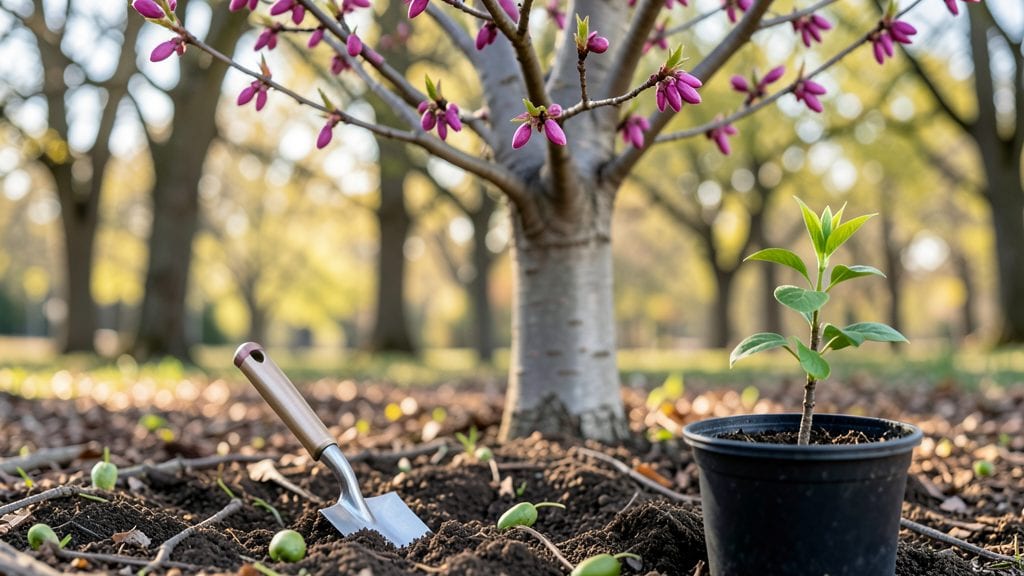
Growing redbud trees means waking up to pink clouds of blooms that transform your yard into a springtime masterpiece. 🌸 I planted mine three years ago after admiring neighbors' trees—now mine bursts into color every March, outshining even the tulips.
The secret isn't hard: these trees thrive with minimal fuss once you get the basics right.
Redbuds love sunny spots and well-draining soil, but they're forgiving about everything else. You can plant them in fall or early spring, and they handle both clay and rocky soil better than fussy ornamentals.
Most nurseries sell 1- to 3-gallon pots, and a single tree costs far less than a season of cut flowers. Just avoid soggy soil, and you'll get decades of blooms.
What you'll love most is how they outperform other spring trees—blooming before leaves appear, then putting on fresh green foliage that stays pretty all summer. With proper pruning (just shape them after blooming), they grow 12-18 inches per year, staying small enough for most yards.
The first year is about establishing roots; after that, they're basically self-sufficient.
Perfect for urban yards, rural landscapes, or even large containers—just give them space to spread their graceful branches. Whether you're replacing a tired shrub or adding color to a new planting, redbuds deliver year after year with almost no maintenance. Let's get yours growing!
📚 In This Guide
- What you need
- Instructions
- Tips and common mistakes
- Wrapping up and next steps
What you need
- ● Redbud tree seedlings or saplings: Choose Cercis canadensis (eastern redbud) or other varieties from a reputable nursery. 1-3 plants (depending on spacing needs).
- ● Well-draining potting mix or garden soil: 5-10 gallons (for planting in containers) or amended native soil (for in-ground planting).
- ● Organic compost or aged manure: 2-3 gallons to enrich soil fertility.
- ● Mulch (wood chips or shredded bark): 2-3 inches to retain moisture and suppress weeds.
- ○ Slow-release fertilizer (optional but recommended): 10-10-10 NPK ratio (follow package instructions).
- ● Garden trowel or shovel: For digging holes (size depends on root ball).
- ● Pruning shears: To trim dead branches or shape young trees.
- ● Watering can or hose with a gentle spray nozzle: For consistent moisture.
- ○ Gloves (optional but handy): To protect hands while handling soil or thorny stems.
- ○ Measuring tape (optional): To ensure proper spacing (15-25 feet apart for mature trees).
- ● Sunlight: Full sun to partial shade (6+ hours of sunlight daily).
- ● Soil pH: Slightly acidic to neutral (6.0-7.5). Test soil if unsure.
- ● Water access: Regular watering (especially in the first year).
- ● Space: Account for mature tree height (20-30 feet) and spread (25-35 feet).
Step-by-Step instructions for growing redbud trees
Here’s how to cultivate these stunning spring bloomers with vibrant pink flowers and graceful, heart-shaped leaves.
🌱 Step 1: Choose the Right Location and Prepare the Soil
Redbud trees thrive in full sun to partial shade, with at least 6 hours of direct sunlight daily for optimal flowering. I always pick a spot with well-draining soil—these trees hate soggy roots. If your soil is heavy clay, amend it with 2-3 inches of compost mixed into the top 12 inches of soil. Redbuds tolerate a range of soil types but perform best in slightly acidic to neutral soil (pH 6.0-7.0).
Dig a hole twice as wide as the root ball but only as deep. The top of the root ball should sit 1-2 inches above ground level—this prevents water from pooling around the trunk. Loosen the sides of the hole to encourage root spread. If planting in fall, choose a site sheltered from strong winds, as young trees can be delicate.
🪴 Step 2: Plant Your Redbud Tree Properly
Gently remove the tree from its container and loosen any circling roots with your fingers—this prevents girdling as the tree matures. Place the root ball in the hole and backfill with native soil, tamping lightly every 2-3 inches to eliminate air pockets. Water deeply to settle the soil around the roots, ensuring no gaps remain.
Mulch the base with 2-3 inches of organic mulch (like wood chips or shredded bark), keeping it 3-4 inches away from the trunk to avoid rot. Mulch helps retain moisture and regulates soil temperature, which is especially important during dry spells. Avoid piling mulch against the trunk—this can trap moisture and invite pests.
☀️ Step 3: Water and Maintain Through the First Year
Water your redbud tree deeply once a week during the first growing season, providing 1-2 gallons per watering depending on soil drainage. The goal is to encourage deep root growth—light, frequent watering leads to shallow roots that struggle in drought. You’ll know it’s getting enough water when the soil 2-3 inches down feels slightly damp but not soggy.
Fertilize lightly in early spring with a balanced, slow-release fertilizer (10-10-10 or similar) to support new growth. Avoid heavy feeding, as redbuds are relatively low-maintenance. Prune only to remove dead or crossing branches—this tree’s natural shape is its beauty. In the first year, focus on establishing strong roots before worrying about flowering.
✂️ Step 4: Support Long-Term Growth and Blooms
Once established, redbuds need minimal care but benefit from annual pruning in late winter or early spring before new growth begins. Remove any suckers or water sprouts that appear at the base or along the trunk—these divert energy from flowering. Thin out crowded branches to improve airflow, which reduces disease risk. Redbuds bloom on old wood, so avoid heavy pruning in fall or winter.
Watch for signs of stress like yellowing leaves or leaf drop—these often signal overwatering or poor drainage. If your tree isn’t flowering after 3-4 years, it may need more sunlight or a light application of phosphorus-rich fertilizer in early spring. Redbuds typically bloom in late winter to early spring, with flowers lasting 2-3 weeks—a stunning show of pink before the leaves emerge.
Tips & tricks for perfect redbud tree growth
These essential tips will help you cultivate healthy, vibrant redbud trees that burst into stunning spring blooms year after year.
Sunlight Strategy: While redbuds tolerate partial shade, the 6 hours of direct sunlight mentioned in Step 1 is non-negotiable for optimal flowering. I've found that morning sun with afternoon shade works beautifully in hotter climates—this gives the tree energy without stressing it during peak heat. If your yard has limited sun exposure, consider planting near a south-facing wall that reflects sunlight during winter months when days are shorter.
Soil Science: The 6.0-7.0 pH range mentioned for soil isn't just a suggestion—redbuds actually become more susceptible to diseases outside this range. I always test my soil before planting and adjust with lime (to raise pH) or sulfur (to lower it) if needed. For heavy clay soils, mixing in the recommended 2-3 inches of compost isn't just about drainage—it creates beneficial microbial activity that helps roots establish faster. Think of it as giving your tree a probiotic boost!
Planting Precision: That 1-2 inch elevation for the root ball in Step 1 might seem minor, but it's crucial for preventing water pooling around the trunk. I've seen many gardeners skip this and end up with rot issues. Pro tip: Use a level to ensure the hole isn't sloped—water should drain evenly away from the trunk. Also, when backfilling, tamp the soil in layers every 2-3 inches to eliminate air pockets that could strangle young roots.
Watering Wisdom: The deep watering routine in Step 3 is about more than just hydration—it trains roots to grow downward where they'll find more stable moisture. I recommend using a moisture meter to check that soil 2-3 inches down stays consistently damp (not soggy) between waterings. In summer, you might need to increase to twice-weekly deep waterings, especially in containers or sandy soils. Remember, shallow roots mean shallow problems like drought stress and poor flowering.
Pro Tips for Grow Redbud Trees
- These essential tips will help you cultivate healthy, vibrant redbud trees that burst into stunning spring blooms year after year.
- Sunlight Strategy: While redbuds tolerate partial shade, the 6 hours of direct sunlight mentioned in Step 1 is non-negotiable for optimal flowering.
- Soil Science: The 6.0-7.0 pH range mentioned for soil isn't just a suggestion—redbuds actually become more susceptible to diseases outside this range.
Frequently asked questions
Got questions about growing redbud trees? You’re not alone! Here are some of the most common concerns—plus quick, practical answers to help you grow these stunning spring bloomers with confidence.
How fast do redbud trees grow?
Redbud trees grow at a moderate pace, adding about 12–18 inches per year under ideal conditions. In their first decade, they’ll reach 15–20 feet tall, while mature specimens can hit 20–30 feet. Patience pays off—these trees are worth the wait for their vibrant blooms!
When is the best time to plant redbud trees?
The ideal window is early spring or fall, when soil temps are cool (50–60°F) and trees can establish roots before extreme heat or cold. Avoid planting in summer’s scorching heat or winter’s freeze, as stress slows growth. Pro tip: Water deeply after planting to reduce transplant shock!
Do redbud trees need full sun?
Yes! Redbuds thrive in full sun (6+ hours daily), but they tolerate partial shade (4–6 hours). In shadier spots, expect fewer blooms and slower growth. For best results, plant them in south- or west-facing areas where they’ll soak up sunlight for those show-stopping pink flowers.
What pests or diseases should I watch for?
Redbuds are generally low-maintenance, but keep an eye out for:
- Aphids or scale insects: Spray with water or insecticidal soap if you spot sticky residue.
- Powdery mildew: Improve airflow and avoid overhead watering to prevent fungal issues.
- Japanese beetles: Handpick or use neem oil to protect leaves.
Can I grow redbud trees in containers?
While possible, redbuds are not ideal for containers long-term—they need deep roots and space to thrive. If you’re set on potted growth, choose a large container (20+ gallons) and replant outdoors within 2–3 years. Dwarf varieties (like ‘Cherokee Brave’) handle containers slightly better but still prefer the ground.
Wrapping up and next steps
Growing redbud trees is a rewarding journey that brings vibrant color and life to your landscape with minimal fuss! 🌸 From selecting the right variety to nurturing young saplings, these hardy trees thrive with just a little patience and care.
Whether you’re adding a pop of spring color or creating a wildlife-friendly haven, your redbud will thank you with stunning blooms year after year.
Ready to get started? Plant your tree this season—your future yard will be the envy of the neighborhood! For extra tips, check out local gardening resources or connect with fellow plant enthusiasts to share your progress. Happy planting! 🌱