Container Gardens
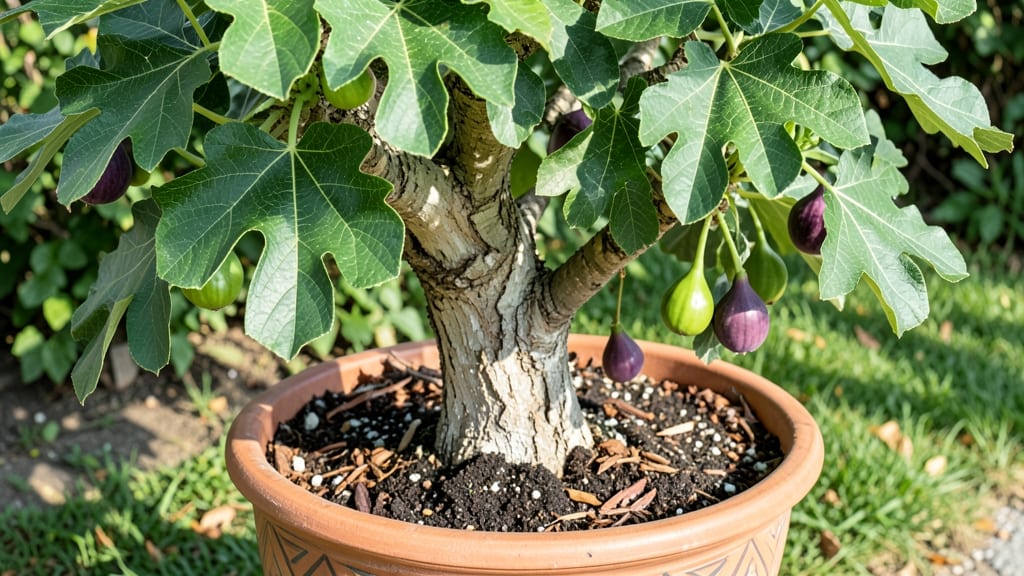
Growing a fig tree in a pot lets you enjoy sun-ripened fruit even on a tiny balcony. 🌿 I learned the hard way that figs need more than just a big container—they crave warmth, good drainage, and a spot that bakes in summer sun.
My first attempt nearly died from soggy roots, but now I’ve got a thriving tree that produces sweet, purple-skinned figs every August.
The secret is starting with the right setup: a 5-gallon minimum pot (bigger for mature trees), fast-draining soil mixed with perlite, and a south-facing windowsill or patio where temps hit 75°F+.
Water only when the top inch feels dry—figs hate wet feet—and fertilize lightly in spring with compost or balanced fertilizer. Prune in late winter to shape the tree and encourage fruit production.
By midsummer, you’ll watch those glossy leaves unfurl and tiny green figs appear. The first harvest is always a triumph—juicy, honey-sweet fruit you grew yourself. Even in apartments, a well-cared-for potted fig can live for decades, rewarding you with harvests year after year.
The key is patience and consistency, but the payoff is worth every drop of water.
This method works for both dwarf varieties like ‘Little Miss Figgy’ and standard types if you upgrade the pot size. Urban gardeners, take note: figs thrive in containers, and with these basics, you’ll be feasting on homegrown fruit in no time. Let’s get that tree growing!
📚 In This Guide
- What you need
- Instructions
- Tips and common mistakes
- Wrapping up and next steps
What you need
- ● Fig tree (bare-root or potted) – Choose a dwarf variety like ‘Little Miss Figgy’ or ‘Celeste’ for pots. 🌿
- ● Large container (15–25 gallons) – Minimum 12–18 inches deep with drainage holes. Terracotta or fabric pots work great!
- ● High-quality potting mix – A blend of 60% potting soil, 30% perlite, and 10% compost ensures drainage and nutrients.
- ● Slow-release fertilizer – Look for one with a balanced NPK ratio (e.g., 10-10-10) or one high in potassium (e.g., 5-10-10) for fruiting.
- ● Drainage rocks or gravel – 2–3 inches at the pot’s bottom to prevent root rot.
- ● Watering can with a rose attachment – Helps avoid soil displacement.
- ● Pruning shears (sterilized) – For shaping and maintenance.
- ● Mulch (straw or wood chips) – Retains moisture and regulates soil temp.
- ● Epsom salt (magnesium sulfate) – Boosts fruit production (1 tbsp per gallon of water, monthly).
- ● Support stake or trellis – Helps manage growth in windy areas.
- ● pH test kit – Figs prefer 6.0–7.0 pH; adjust with lime or sulfur if needed.
Step-by-step guide to growing a fig tree in a pot
Here's how to grow a productive fig tree in containers—perfect for patios, balconies, or small yards.
🪴 Step 1: Choose the Right Container and Drainage
Start with a 5-gallon pot or larger (at least 18 inches deep and wide) for your first fig tree. Figs need room to spread their roots, so avoid shallow containers. I use terra cotta pots because they breathe and help prevent root rot, but plastic works too if it has drainage holes. Add 3-4 inches of gravel or broken pottery at the bottom—this ensures excess water drains away from roots and prevents soggy soil.
If your pot lacks drainage, drill 2-3 holes in the bottom. Cover them with landscape fabric to keep soil from washing out while still allowing water to escape. A saucer underneath catches runoff, but empty it after watering to avoid root suffocation from standing water.
🌱 Step 2: Plant Your Fig Tree with Proper Soil and Positioning
Fill the pot with a mix of 60% potting soil, 30% perlite or pumice, and 10% compost—this ensures drainage while retaining enough moisture for roots. I like to add a handful of slow-release fertilizer (like 10-10-10) at planting time to give the tree a nutrient boost. Place your fig tree so the root ball sits just below the pot’s rim—this prevents soil from spilling out when watering.
Figs thrive in full sun (6+ hours daily), so position your pot where it gets morning sun and afternoon shade in hot climates. If you’re in a cooler zone, full sun all day is ideal. Water deeply after planting to settle the soil around the roots, but avoid overwatering—figs hate wet feet.
☀️ Step 3: Water and Feed for Healthy Growth
Water your fig tree once a week in the first month, then every 10-14 days once established—adjust based on weather. Stick your finger 2 inches into the soil; if it’s dry, water until it drains from the bottom. Overwatering is the #1 killer of potted figs, so always let the top inch dry out between waterings. In summer, you may need to water twice a week if the pot feels light.
Feed your tree every 4-6 weeks during growing season (spring to fall) with a balanced liquid fertilizer (like 20-20-20). I dilute it to half-strength to avoid burning roots. In winter, skip fertilizing—figs go dormant and don’t need extra nutrients. Prune back any dead or weak branches in early spring to encourage new growth.
✂️ Step 4: Prune and Protect for Fruit Production
Prune your fig tree in late winter or early spring before new growth starts. Remove dead, crossing, or weak branches to improve airflow and sunlight penetration. I also trim back any suckers (shoots growing from the base) to focus the tree’s energy on fruit production. Figs fruit on new wood, so light pruning keeps the tree manageable and productive.
If you’re in a cold climate, move your pot indoors (or wrap it in burlap and bubble wrap) when temperatures drop below 20°F. Figs are tender and won’t survive frost. In warmer zones, leave it outside year-round. Watch for aphids or spider mites—spray with neem oil if you spot pests, but figs are generally low-maintenance.
🍇 Step 5: Harvest and Enjoy Your Homegrown Figs
Figs ripen in late summer to fall, depending on your variety. They’re ready when they soften slightly and turn from green to deep purple or brown. Gently twist the fig from the branch—it should come off easily. If it resists, it’s not ripe yet. Harvest every 2-3 days to encourage more fruit production.
Store unripe figs at room temperature until they ripen, or refrigerate for up to 3 days. Once ripe, enjoy them fresh, dry them for snacks, or use them in jams and desserts. With proper care, your potted fig can produce fruit for years—some varieties even bear two crops per season!
Tips & tricks for growing a fig tree in a pot
Here's what nobody tells you about keeping your potted fig thriving—and producing fruit year after year.
Container Size Matters: That 5-gallon pot recommendation isn't just a starting point—it's a minimum. Figs grow surprisingly fast, and roots will quickly outgrow even a 5-gallon container within a year. I upgrade to a 7-10 gallon pot by year two to give roots proper expansion room. This prevents root binding, which stunts growth and reduces fruit production.
Soil Mix Secrets: The 60-30-10 soil ratio is perfect, but here's the real trick: add a handful of egg shells to your planting mix. Crushed shells provide calcium that prevents blossom end rot in figs, and the texture mimics natural soil. I also mix in 1 part coconut coir to the potting soil for better moisture retention without compacting.
Watering Wisdom: That "let the top inch dry" rule is golden, but there's more. Use a moisture meter to check deeper than 2 inches—fig roots go deeper than you think. In summer, I water in the early morning to prevent evaporation and fungal growth. And here's a pro move: water the gravel layer occasionally to prevent salt buildup from mineral deposits.
Cold Protection Hacks: The 20°F threshold is critical, but don't wait until the last minute to move your pot indoors. Start monitoring forecasts when temps dip below 30°F—figs begin stressing at that point. For extra protection, place your pot on a tray of dry leaves before moving inside; this insulates roots from temperature shocks. In mild winters, a frost cloth wrapped around the pot works wonders.
Pro Tips for Grow A Fig Tree In A Pot
- Here's what nobody tells you about keeping your potted fig thriving—and producing fruit year after year.
- Container Size Matters: That 5-gallon pot recommendation isn't just a starting point—it's a minimum. Figs grow surpri...
- Soil Mix Secrets: The 60-30-10 soil ratio is perfect, but here's the real trick: add a handful of egg shells to your ...
Frequently asked questions
Got questions about growing figs in pots? You’re not alone! Here are some of the most common concerns—and their straightforward answers—to help you cultivate a thriving container fig tree.
How big should my pot be for a fig tree?
A standard 15- to 20-gallon pot works for most fig varieties, but larger is always better. Figs have deep roots, so aim for at least 12–18 inches in diameter and 18+ inches deep. If you’re growing a dwarf variety (like ‘Little Miss Figgy’), a 10-gallon pot may suffice temporarily, but upgrade as the tree matures.
Can I grow a fig tree in a pot indoors?
Figs can thrive indoors, but they need bright, direct sunlight (6+ hours daily) near a south- or west-facing window. A grow light works in a pinch, but expect slower growth and fewer fruits. Most indoor figs stay ornamental—save fruiting for outdoor pots in zones 8+ or container-friendly climates.
When will my potted fig tree produce fruit?
Patience is key! Dwarf varieties may fruit in 2–3 years, while standard figs can take 3–5 years in pots. Ensure your tree gets full sun, consistent water, and proper fertilization (like a balanced 10-10-10 mix in spring). Cold winters or root-bound pots can delay fruiting—check for these issues if your tree skips production.
Why are my fig tree’s leaves turning yellow or dropping?
Yellowing leaves often signal overwatering, underwatering, or nutrient deficiencies. Check the soil—it should be dry 1–2 inches down before watering. Brown edges? Too much salt or sunburn. Wilting + crispy leaves? Underwatering. Feed with citrus fertilizer in spring/summer if growth stalls. Pests (like spider mites) can also cause stress—spray with neem oil if needed.
How do I protect my potted fig from winter frost?
Figs are tender perennials and need winter care in cold climates (below 20°F). Move pots to a garage or insulated porch (50–60°F) and reduce watering. Wrap the pot in bubble wrap or frost cloth for extra protection. If temps drop below 15°F, consider mulching the roots with straw or using a heated mat for critical varieties.
Can I grow multiple fig trees in one large container?
Yes! Plant 3–5 fig trees in a 30+ gallon container for a “fig grove” effect. Choose compatible varieties (like ‘Celeste’ and ‘Brown Turkey’) and prune them into a single trunk or bushy shape for harmony. Just ensure the pot has drainage holes and you monitor watering closely—crowded roots can lead to disease.
Wrapping up and next steps
Growing a fig tree in a pot is a rewarding journey that brings sweet rewards—literally! 🌱 With the right sunlight, soil, and care, you’ll enjoy fresh figs even in small spaces. Start small, stay patient, and soon you’ll be harvesting homegrown fruit right from your balcony or patio.
Ready to take the next step? Pick your favorite fig variety and get planting—your future self (and taste buds) will thank you! 🍇✨