
Pests
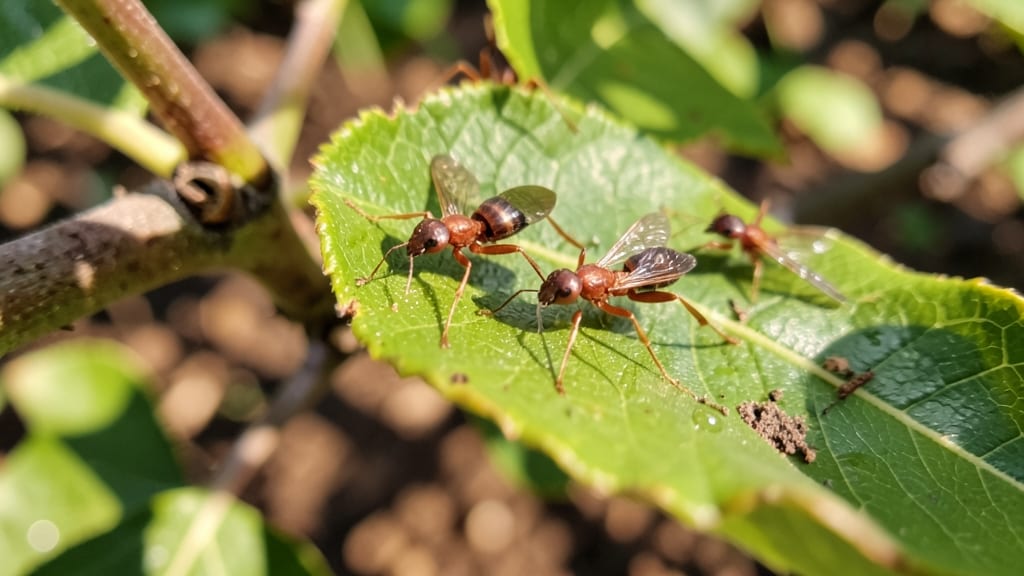
Ants in your fruit trees aren’t just a nuisance—they’re opening the door for aphids, mealybugs, and other pests that drain your tree’s energy. 🌳 I’ve battled these tiny invaders for years, and the key isn’t just killing them but cutting off their access to your tree’s sap.
The fastest way to stop them? A two-pronged barrier that disrupts their trails and removes their food source.
You’ll need Tanglefoot or petroleum jelly (to block their paths), diatomaceous earth (a natural powder that dehydrates them), and pruning shears to trim away infested branches. The trick is applying these barriers before the ants establish highways up your tree—once they’re deep in the bark, it’s harder to dislodge them.
I’ve seen results in as little as 48 hours when I act fast.
What you’ll end up with is a tree that stays ant-free and thrives without chemical warfare. The leaves stay vibrant, the fruit develops sweetness without pest damage, and you avoid the sticky honeydew trails that ants leave behind.
Plus, your tree’s natural defenses get a chance to strengthen without constant interruptions.
This method works for apple, peach, cherry, and citrus trees, but the timing matters—spring and early summer are when ants first scout for sap. If you’ve got a heavy infestation now, we’ll also cover how to reset the ecosystem so they don’t return next season.
📚 In This Guide
- What you need
- Instructions
- Tips and common mistakes
- Wrapping up and next steps
What you need
- ● Diatomaceous earth (food-grade): 1–2 lbs (ensure it’s non-toxic and fine powder)
- ● Borax or boric acid: 1 cup (for DIY ant bait—handle with gloves!)
- ● Sugar: ½ cup (for bait mixtures)
- ● Water: 1 gallon (for sprays or mixing solutions)
- ● Spray bottle: 16–32 oz (with a fine mist nozzle)
- ● Gloves: 1 pair (nitrile or rubber for safety)
- ● Stiff brush or broom: To clear debris from tree bases
- ● Trowel or small shovel: For applying barriers in soil
- ● Cinnamon or cayenne pepper: ½ cup (natural repellent—sprinkle around tree base)
- ● Essential oils: Tea tree, peppermint, or lemon oil (10–15 drops) (mix with water for sprays)
- ● Orange or lemon peels: 2–3 peels (scatter near entry points for scent deterrence)
- ● Plastic or metal barriers: 1–2 ft wide (to block ant trails physically)
- ● Hose with nozzle: For rinsing trees post-treatment
Step-by-Step instructions for creating natural ant barriers in fruit trees
Here's how I eliminate ants from fruit trees—without chemicals—using simple, effective methods you can set up in under an hour.
🪴 Step 1: Identify and Clear Existing Ant Trails
First, find where ants are entering the tree. Look for tiny black lines on the trunk or branches—these are their pheromone trails. I like to spray these trails with a 50/50 mix of water and white vinegar in a spray bottle. The vinegar disrupts their scent markers and forces them to find new routes. Do this in the early morning when ants are most active.
While you're at it, check the soil at the base of the tree for mounds. These are their nesting sites. I use a long-handled shovel to carefully remove any visible nests, then scatter the soil away from the tree. Ants will avoid these areas once their homes are disturbed. Real talk: if you don't clear these trails first, your barriers won't work as well.
💧 Step 2: Apply a Diatomaceous Earth Barrier
Sprinkle food-grade diatomaceous earth (DE) in a 2-inch wide band around the base of the tree trunk. This natural powder kills ants by dehydrating them—it's safe for plants but deadly for insects. I use about ½ cup per tree, applied evenly. Avoid getting it on leaves, as it can dry them out. Water the area lightly afterward to help it settle into the soil.
Reapply DE every 7-10 days or after rain, as it loses effectiveness when wet. I like to do this on a dry, sunny afternoon so the powder has time to work before evening moisture washes it away. Watch for ants struggling to cross the barrier—you'll see them turn away within hours.
☀️ Step 3: Set Up a Tanglefoot or Petroleum Jelly Trap
Wrap a 1-inch band of Tanglefoot or petroleum jelly around the trunk, about 6 inches from the soil. This sticky barrier traps ants trying to climb up the tree. I use a soft paintbrush to apply it smoothly, ensuring there are no gaps. Ants will get stuck almost immediately, and their scent signals will warn others away. Check the trap every 3-4 days and reapply as needed—it loses stickiness over time.
For larger trees, add a second band 12 inches higher to catch ants that might bypass the first one. I also place a few small petri dishes filled with water and a drop of dish soap near the tree. Ants drown in these, and the soap reduces surface tension so they can't escape. This combo works fast—usually within 24-48 hours, the ant traffic drops noticeably.
✂️ Step 4: Introduce Natural Predators
Encourage ants' natural enemies to move into your orchard. Ladybugs, lacewings, and parasitic wasps all prey on ants. I plant dill, fennel, and yarrow near the trees to attract these beneficial insects. These plants also provide shelter for ground beetles, which eat ant eggs and larvae. Within 2-3 weeks, you'll see a reduction in ant activity as the ecosystem balances itself.
If you spot aphids or scale insects on your fruit trees, don't panic—they'll draw in more ladybugs, which will help control the ant population. I avoid pesticides entirely, as they kill these helpful predators too. Instead, I rely on neem oil spray (mixed with water) to target pests without harming the ecosystem. Apply it in the early evening to avoid harming bees.
⏰ Step 5: Maintain Barriers and Monitor Results
Check your barriers weekly for gaps or signs of ant activity. If you see new trails forming, reapply DE or Tanglefoot immediately. I also keep an eye on the tree's leaves—if ants start climbing again, it might mean they've found a new entry point. A quick spray of soapy water on the trunk can disrupt their progress temporarily.
Within 2-3 weeks, you should see a significant drop in ant numbers. The key is consistency—ants are persistent, but these methods work if you stay on top of them. Once the infestation is under control, focus on keeping the area clean and removing fallen fruit to prevent future problems. You'll know it's working when you no longer see ants marching up and down the trunk.
Tips & tricks for natural ant barriers in fruit trees
These simple tricks will help you create effective ant barriers faster and keep your fruit trees ant-free for weeks.
Timing is Everything: The 24-48 hour window after applying your barriers is critical. This is when ants will most actively try to cross the DE barrier or climb the sticky traps. I recommend setting up your barriers in the morning so you can observe ant activity throughout the day. You'll notice the biggest impact within this timeframe—ants will either get trapped or avoid the barriers entirely.
Visual Inspection Wins: In Step 1, when clearing existing ant trails, don't rely solely on what you see. Gently run your fingers along the trunk and branches—you'll often feel tiny grooves where ants have been traveling. These hidden trails are just as important to treat as the visible ones. I also carry a small flashlight to check for trails on the undersides of branches where light doesn't reach.
Dual Barrier Strategy: For maximum effectiveness, combine the DE barrier at the base with the sticky trap higher up. The DE handles ground-level ants while the sticky trap catches those trying to climb. I've found that ants often bypass one barrier if only one is present. The combination creates a "no way through" situation that forces them to find new routes or give up entirely.
Seasonal Considerations: Ant activity peaks during warm, dry periods. If you're setting up barriers in spring or early summer, you'll see results faster than in cooler months. In fall, ants are preparing for winter and become more aggressive about finding food sources. Adjust your monitoring frequency accordingly—check barriers every 3-4 days during peak seasons, but you can extend to weekly during cooler months.
Pro Tips for Get Rid Of Ants In Fruit Trees
- These simple tricks will help you create effective ant barriers faster and keep your fruit trees ant-free for weeks.
- Timing is Everything: The 24-48 hour window after applying your barriers is critical.
- Visual Inspection Wins: In Step 1, when clearing existing ant trails, don't rely solely on what you see.
Frequently asked questions
Will vinegar or lemon juice really work to repel ants?
Yes! Both vinegar and lemon juice are effective because ants dislike their strong scents. Mix 1 part vinegar or lemon juice with 1 part water and spray directly on ant trails, fruit tree trunks, and soil. Reapply after rain or every 3–4 days for best results. For extra potency, add a few drops of peppermint or citrus essential oil.
How long does it take to see results after using natural repellents?
Most natural methods show improvement within 24–48 hours, but complete eradication can take 1–2 weeks, depending on the infestation size. Consistency is key—ants rebuild trails quickly, so reapply treatments every 3–5 days until no new activity is spotted. Combine barriers (like diatomaceous earth) with sprays for faster results.
Are ants harmful to my fruit trees beyond being a nuisance?
While ants themselves don’t damage trees directly, they farm aphids, which suck sap and weaken branches. Heavy infestations can also lead to sooty mold (a black fungus) on fruit, reducing yield and quality. Act fast to protect both tree health and harvest—target ant trails first to break their aphid "farm" cycle.
Can I use coffee grounds or cinnamon as a long-term solution?
Both are excellent long-term deterrents:
- Coffee grounds: Sprinkle fresh grounds around the tree base (ants avoid the smell). Refresh weekly or after rain.
- Cinnamon: Mix cinnamon powder with water to create a paste, apply to trunks, and reapply every 2 weeks. Bonus: It also repels slugs!
What should I do if ants keep coming back after I’ve treated the area?
Persistent ants often mean hidden nests or new trails. Try these troubleshooting steps:
- Inspect undisturbed areas (under rocks, mulch piles, or tree roots) for nests—use a flashlight at dusk.
- Check for secondary food sources (like fallen fruit or pet food) and remove them.
- Create a water barrier: Pour boiling water into holes near trails to kill larvae.
- Upgrade to borax bait stations (mix 1 part borax with 3 parts sugar + water) for colony-wide elimination.
Wrapping up and next steps
Getting rid of ants in your fruit trees doesn’t have to be a frustrating battle—with the right natural barriers and proactive steps, you can reclaim your orchard in no time! 🌿 From diatomaceous earth to citrus peels and vinegar sprays, these methods are effective, eco-friendly, and safe for your trees and garden. Remember, consistency is key—monitor your trees regularly and act fast at the first sign of trouble.
Now that you’re armed with solutions, take action today! Start with one or two methods that fit your garden best, and soon you’ll enjoy pest-free fruit trees. Happy gardening! 🌳🍏