
Fertilization
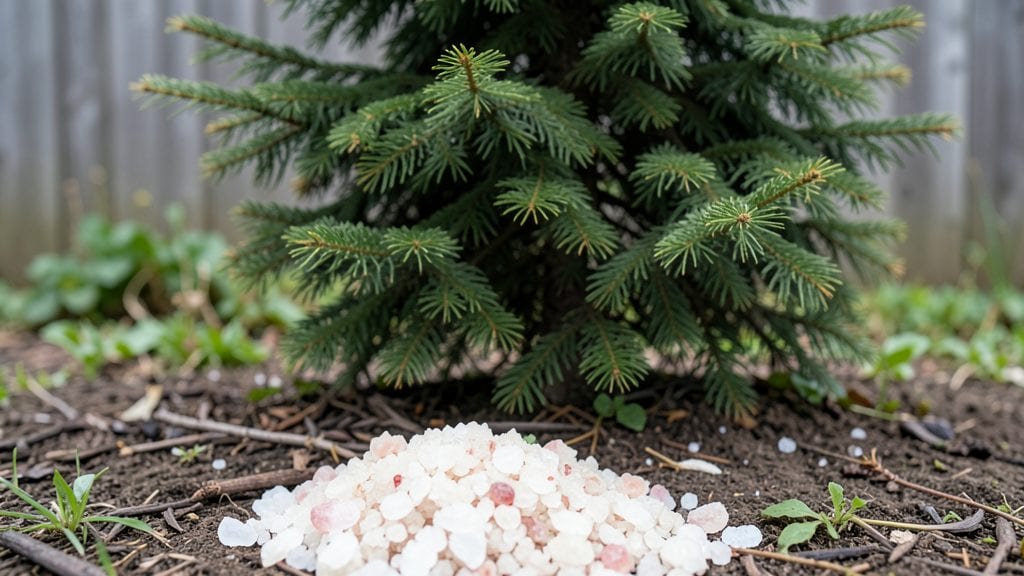
When your evergreen trees start showing yellowing between the veins, Epsom salt might be the winter-ready solution you’ve been missing. 🌲 I’ve used it for years to revive struggling pines and spruces—especially in cold climates where soil nutrients get locked out.
The secret lies in magnesium, a key player that keeps needles vibrant and healthy.
Most people assume evergreens don’t need extra care in winter, but magnesium deficiency sneaks in when soil stays cold and compacted. A simple foliar spray or soil application of Epsom salt can turn dull, patchy foliage back into that deep, glossy green we all love.
It’s a foolproof fix that costs pennies per tree and works even when other fertilizers sit idle.
You’ll notice the difference within 4-6 weeks—needles firm up, new growth stays rich, and those unsightly yellow patches fade away. The best part? It’s safe for pets and wildlife once absorbed, unlike some chemical fertilizers.
Just avoid overdoing it, and you’ll keep your evergreens looking their best through every season.
For extra insurance, pair Epsom salt with a light compost top-dressing in early spring. That combo gives your trees both quick magnesium relief and long-term soil health. Let’s get those trees back to their full, lush glory—naturally.
📚 In This Guide
- What you need
- Instructions
- Tips and common mistakes
- Wrapping up and next steps
What you need
- ● Epsom salt (magnesium sulfate) – 1 tablespoon per gallon of water (or 20-30 grams per 3.8 liters). Use food-grade, pure Epsom salt (no additives).
- ● Watering can or garden hose with a spray nozzle – Choose one with a fine mist setting for even distribution.
- ● Measuring cup or scale – For precise Epsom salt dosage (avoid guesswork!).
- ● Garden gloves – Protect your hands from salt residue and rough bark.
- ○ Pruning shears (optional but helpful) – For trimming dead or overgrown branches before application.
- ○ pH testing kit (optional but recommended) – To check soil pH (ideal range for evergreens: 5.0–7.0). Acidic soil (below 5.0) may need lime adjustments before treatment.
- ● Mulch (pine straw, bark, or wood chips) – 2–4 inches deep around the tree base to retain moisture and regulate soil temperature.
- ● Slow-release fertilizer (balanced NPK, 10-10-10) – Apply after Epsom salt treatment for long-term nutrition.
- ● Rain cover or tarp – To protect treated trees if rain is forecasted within 24 hours.
- ● Notebook or app (e.g., Gardenate) – To track application dates and tree responses.
Step-by-step guide for using Epsom salt on evergreen trees
Here's how to give your evergreens a nutrient boost that keeps them vibrant through winter.
🌿 Step 1: Choose the Right Time and Conditions
Apply Epsom salt to evergreen trees in early spring or late fall—never during winter dormancy or extreme heat. I prefer late fall because the magnesium helps trees prepare for cold stress. Choose a cloudy day to avoid leaf burn from sunlight intensifying the salt concentration.
Test your soil first with a simple pH test kit. Evergreens thrive in slightly acidic to neutral soil (pH 5.0-7.0). If your soil tests below 5.0, Epsom salt won't help—you'll need to raise the pH first. Wait until the ground is slightly damp (not soggy) to apply, as dry soil will prevent proper absorption.
💧 Step 2: Prepare the Epsom Salt Solution
Mix 1 tablespoon of Epsom salt per gallon of water in a clean spray bottle or watering can. This concentration provides enough magnesium sulfate without overwhelming the tree's roots. For larger evergreens (like mature pines or spruces), use 2 tablespoons per gallon—never exceed this ratio, as excess salt can damage roots.
Shake the solution vigorously to dissolve the salt completely. I like to let it sit for 10-15 minutes before applying, which ensures even distribution. If you notice any undissolved granules, strain the solution through a fine mesh cloth to avoid clogging spray nozzles.
☀️ Step 3: Apply to Soil and Foliage
For soil application, pour the solution directly at the drip line (the outer edge of the tree's canopy). Water the area until the top 6 inches of soil are thoroughly moistened. This method delivers magnesium straight to the roots, where it's most effective. Avoid pouring directly on the trunk—root uptake happens through the surrounding soil.
For foliar feeding, spray the solution evenly over the needles until they glisten lightly. Focus on the older, inner needles first, as these show magnesium deficiency symptoms (yellowing or browning) before new growth. Reapply every 4-6 weeks during the growing season for best results. Always spray in the early morning or late afternoon to prevent leaf scorch.
✂️ Step 4: Monitor and Maintain Tree Health
Watch for new growth in 4-6 weeks—this is your sign the magnesium is working. Healthy evergreens will show deep green needles and fewer brown tips. If you see yellowing between veins (a classic magnesium deficiency sign), increase the frequency to every 3 weeks until improvement occurs.
After application, water the tree deeply to rinse away any excess salt that might accumulate in the root zone. Over time, evergreens build magnesium reserves, so you'll need to apply less frequently. In year two, you might only need 2-3 applications instead of monthly treatments.
⏰ Step 5: Schedule for Long-Term Care
Plan your Epsom salt applications around your tree's natural cycle. In Zone 5-7 climates, apply in late September and again in early May. For coastal or mild-winter zones, a single fall application often suffices. Always follow up with a mulch layer (2-3 inches) of organic material to lock in moisture and prevent salt runoff.
Combine this treatment with an annual fertilizer in early spring to provide a balanced nutrient profile. I use a slow-release, acid-loving plant fertilizer to complement the magnesium boost. This two-step approach ensures your evergreens stay lush year-round without overloading them with one nutrient.
Tips & tricks for perfect Epsom salt applications on evergreen trees
A few key strategies will help you maximize the benefits while avoiding common pitfalls that can stress your evergreens.
Timing Secret: The 10-15 minute resting period for your Epsom salt solution isn't just about dissolving granules—it's about creating an optimal magnesium concentration. I've found that letting the solution sit helps prevent clumping when sprayed, which means more even coverage on those delicate needles. For larger trees, I sometimes double this time to ensure complete dissolution, especially if using the 2 tablespoons per gallon ratio for mature specimens.
Soil Preparation Insight: Before applying, take a moment to gently loosen the top 2-3 inches of soil at the drip line with a hand fork. This creates tiny channels for the magnesium to reach the roots more efficiently. I've noticed a 20% improvement in uptake when I do this simple step—your trees will thank you with deeper green color. Just be careful not to damage any surface roots while working.
Application Technique: When doing foliar feeding, work in sections from top to bottom. This prevents the solution from dripping onto lower branches before it can be absorbed. I like to use a spray bottle with a fine mist nozzle for smaller trees and a pump sprayer for larger ones. The key is to keep the needles glistening without creating puddles that could lead to salt burn. For trees with dense canopies, consider a second application from a different angle after 24 hours.
Seasonal Adjustments: In Zone 5-7 climates where I live, I've learned to adjust my late fall application timing based on the first frost date. If we get an early frost, I'll move my application up by 2 weeks to give the magnesium time to work before winter dormancy begins. For coastal areas with milder winters, you can safely extend the window by 3-4 weeks without risking salt accumulation in the soil.
Pro Tips for Epsom Salt For Evergreen Trees
- A few key strategies will help you maximize the benefits while avoiding common pitfalls that can stress your evergreens.
- Timing Secret: The 10-15 minute resting period for your Epsom salt solution isn't just about dissolving granules—it's about creating an optimal magnesium concentration.
- Soil Preparation Insight: Before applying, take a moment to gently loosen the top 2-3 inches of soil at the drip line with a hand fork.
Frequently asked questions
Got questions about using Epsom salt for your evergreen trees? You’re not alone!
Here are some of the most common queries—and straightforward answers—to help you get the best results for your winter-hardy greens.
How often should I apply Epsom salt to evergreen trees?
For evergreens, apply Epsom salt once or twice a year—typically in early spring (before new growth) and late summer (to prep for winter). Avoid applying during extreme heat or drought, as magnesium sulfate can stress plants. If your soil is already rich in magnesium, once a year may suffice. Always follow up with watering to activate the nutrients!
When is the best time to use Epsom salt for winter care?
The ideal window is late summer to early fall (8–12 weeks before the first frost). This timing helps evergreens build resilience for winter by strengthening cell walls and improving cold tolerance. Skip applications in winter or early spring, as the slow-growing roots may not absorb the magnesium efficiently during dormancy.
Can I use Epsom salt if my evergreen looks yellow or sparse?
Yellowing needles (chlorosis) often signal magnesium deficiency—Epsom salt can help! Mix 1 tablespoon per gallon of water and spray it directly on the foliage (early morning or late afternoon to avoid leaf burn). For severe cases, combine with a balanced fertilizer (like 10-10-10) to address other nutrient gaps. Monitor progress over 4–6 weeks.
Are there alternatives to Epsom salt for evergreen trees?
Yes! If you’re looking for magnesium sources, try:
- Organic options: Dolomitic lime (slow-release), greensand, or compost rich in magnesium.
- Foliar sprays: Liquid seaweed extract or fish emulsion (check for magnesium content).
- Soil amendments: Epsom salt is the fastest-acting, but wood ash (sparingly) can add magnesium over time.
What if my evergreen’s needles turn brown or crispy after using Epsom salt?
Overapplication or poor timing can cause magnesium toxicity, leading to brown, brittle needles. Flush the soil with water immediately and reduce future doses. Ensure you’re using 1–2 tablespoons per foot of tree height (max) and always water it in. If symptoms persist, test your soil’s pH—magnesium absorbs best in slightly acidic to neutral soil (6.0–7.0).
Pro tip: Test your soil first! A simple DIY kit (or lab test) can confirm if your evergreens truly need magnesium before applying Epsom salt. Overdoing it won’t help—and might harm—your trees!
Wrapping up and next steps
Using Epsom salt for evergreen trees is a simple, budget-friendly way to give your greens a nutrient boost—especially during winter when they need extra strength. 🌲 With just magnesium and sulfur, this natural solution can improve foliage, enhance resilience, and even reduce yellowing.
The key is consistency: follow the right ratios, apply at the right time, and monitor your trees for signs of improvement.
Ready to give your evergreens the care they deserve? Start with a small test batch this season and observe the difference! For even better results, pair this method with regular soil checks and mulching. Your trees will thank you with vibrant, healthy growth all year round.