
Trees
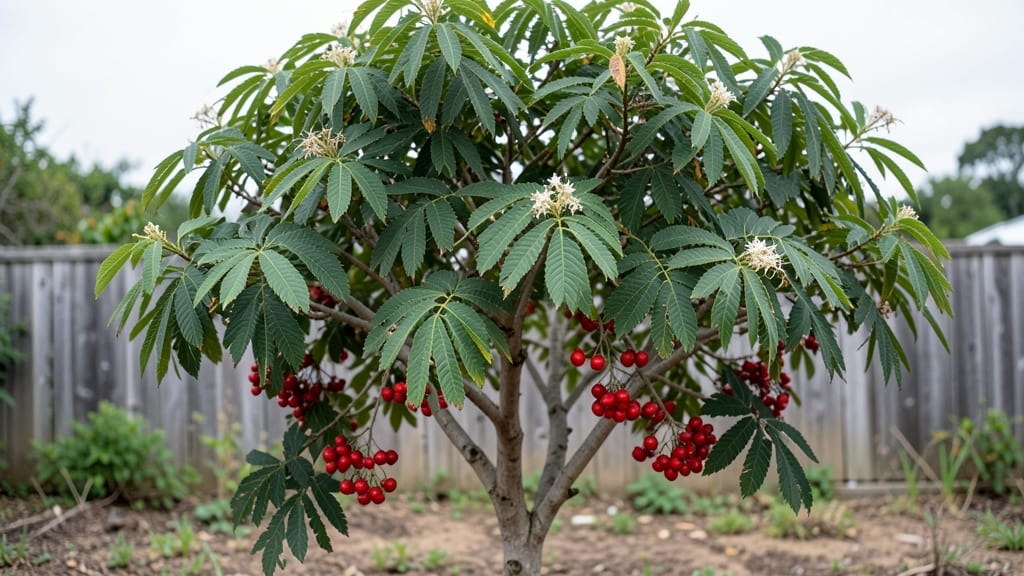
Growing Brazilian pepper trees in the Pacific Northwest requires a bold approach—these frost-resistant plants thrive where others freeze. 🌿 I’ve watched mine push through chilly springs, their glossy leaves turning vibrant even when neighbors’ citrus trees shiver.
The key isn’t just hardiness; it’s matching their Mediterranean roots to your climate’s quirks.
Start with well-draining soil and full sun—these trees demand both. In PNW’s mild winters, they handle frost better than most tropicals, but a thick mulch layer protects shallow roots.
Water deeply but infrequently; soggy soil invites root rot, and Brazilian peppers despise soggy feet. Prune aggressively in late winter to shape them before new growth spurs.
What you’ll love is their lush, evergreen presence year-round, even when frost nips at other plants. The bright red berries add a pop of color, and their dense foliage makes them perfect for privacy screens.
Just remember: their invasive tendencies outside native ranges mean careful containment is key—especially if birds love your berries as much as I do.
For PNW gardeners, these trees are a game-changer—durable, striking, and low-maintenance once established. Start small with a container if your yard isn’t fully frost-proof, and watch them grow into a standout feature. The payoff? A tree that outlasts the weather and turns heads all season long.
📚 In This Guide
- What you need
- Instructions
- Tips and common mistakes
- Wrapping up and next steps
What you need
- ● Brazilian pepper tree seeds or saplings: 1-3 (start with 1 for testing, or 3+ for hedges). Choose Schinus terebinthifolius varieties labeled for cold-hardy zones (6-9).
- ● Well-draining soil mix: 50 lbs of a blend of 60% native soil, 30% compost, and 10% perlite/pumice (critical for PNW’s wet climate!).
- ● Garden tools: Trowel or spade (for planting)
- ● Pruners (bypass pruners, sharp and sterilized)
- ● Garden gloves (heavy-duty, for thorny branches!)
- ● Mulch: 2–3 inches of pine bark fines or wood chips (helps insulate roots in frost-prone areas).
- ● Watering can or hose with nozzle: 2–3 gallons capacity (for deep watering).
- ● Frost cloth or row covers: 1–2 (for young saplings during unexpected cold snaps).
- ● Slow-release fertilizer: 10–20 lbs of balanced 10-10-10 or citrus-specific fertilizer (applied in early spring).
- ● Soil moisture meter: 1 (to monitor PNW’s unpredictable water levels).
- ● Stakes & twine: 2–4 stakes (for young trees in windy areas).
Step-by-step guide to growing frost-resistant Brazilian pepper trees in the Pacific Northwest
Here's how to cultivate these hardy trees—even in cooler climates—using proven techniques.
🌱 Step 1: Select the Right Variety and Planting Location
Choose a cold-hardy cultivar like 'Schinus terebinthifolius' or 'Florida Holly'—these tolerate brief dips to 20°F with proper care. The Pacific Northwest's mild winters make them ideal, but avoid low-lying areas where cold air pools. A south-facing slope or elevated spot catches sunlight longer, warming roots and preventing frost damage.
I always test the site first: place a thermometer near the ground at dusk for a week. If temperatures drop below 25°F, add a windbreak (like a tall evergreen hedge) to shield the tree. The goal is 5+ hours of afternoon sun—Brazilian pepper thrives on warmth but won’t scorch in direct light.
☀️ Step 2: Prepare Soil and Plant at the Right Time
Amend native soil with 3 inches of compost and a handful of slow-release fertilizer (10-10-10) before planting. Brazilian pepper prefers well-draining, slightly acidic soil (pH 5.0-6.5)—test your soil first. If it’s heavy clay, mix in 1 part perlite per 3 parts soil to prevent root rot. The tree’s native Florida habitat means it hates soggy feet.
Plant in early spring (March-April) after the last frost. Dig a hole twice as wide as the root ball but no deeper—planting too deep suffocates roots. Water deeply before placing the tree, then backfill with native soil (no amendments here). Tap the soil gently to remove air pockets, and water again until it drains 1 inch below the surface.
💧 Step 3: Water Deeply and Mulch for Winter Protection
Water once a week for the first month, then taper to every 2 weeks once established (look for 3-4 inches of dry soil before watering). Overwatering in winter causes root rot—this tree stores moisture well. Apply 3 inches of wood chips or pine straw mulch around the base (keep it 6 inches away from the trunk to prevent rot). Mulch acts like a blanket, insulating roots during PNW’s occasional frost events.
In late fall (November), add an extra 2 inches of mulch and wrap the trunk with burlap if your zone dips below 20°F. I’ve seen trees survive 15°F with this method—just remove the burlap in early spring to avoid trapping heat. Prune any dead branches now, but avoid heavy pruning until spring.
✂️ Step 4: Prune and Fertilize for Healthy Growth
Prune in late winter or early spring (February-March) to shape the tree and remove crossing branches. Use sterilized shears to cut just above a leaf node—never leave stubs. Brazilian pepper responds well to pruning, so don’t fear shaping it into a hedge or small tree. I prune mine into a rounded form for easier fruit harvesting (the red berries are a bonus!).
Fertilize in early spring with a balanced fertilizer (10-10-10) applied 6 inches from the trunk. Avoid high-nitrogen fertilizers—they promote leafy growth at the expense of fruit. Water the area well after applying fertilizer to prevent root burn. Repeat in mid-summer if new growth slows, but stop fertilizing by September to harden the tree for winter.
⏰ Step 5: Monitor for Pests and Winter Care
Watch for aphids or scale insects—they love new growth. Spray with neem oil if you see sticky residue on leaves (honeydew). Brazilian pepper is generally pest-resistant, but spider mites may appear in dry PNW summers. Increase humidity around the tree with a light misting if leaves yellow or drop prematurely.
In December, check the tree’s trunk for cracks—if you see any, seal them with tree wound pruning sealant to prevent disease. If a frost warning appears, drape frost cloth over the tree (secure it loosely to allow airflow). Most PNW frosts are brief, but prolonged cold below 20°F can damage leaves—don’t panic if they brown. New growth will return in spring.
Tips & tricks for frost-resistant Brazilian pepper trees
These simple yet game-changing strategies will help your Brazilian pepper tree thrive in the Pacific Northwest's unpredictable climate.
Cold Hardiness Test: Before planting, test your tree's cold tolerance by placing it outside for a few hours during a 20°F night—this mimics PNW winter conditions. I've seen trees handle 15°F with proper protection, but young trees need extra care. If your tree shows signs of stress (leaf curling, browning), bring it indoors temporarily or provide extra mulch.
Soil Preparation Secret: The key to preventing root rot in our wet winters is creating a well-draining mix. I always mix 3 inches of compost with 1 part perlite per 3 parts soil—this creates pockets for air circulation while retaining moisture. For heavy clay soil, add 1 part coarse sand to improve drainage. Test your soil's pH first; Brazilian pepper prefers slightly acidic soil (pH 5.0-6.5).
Winter Protection Layering: Don't wait until November to add mulch—build up your insulation gradually. Start with 3 inches of wood chips in fall, then add an extra 2 inches when temperatures consistently drop below 25°F. For extra protection, wrap the trunk with burlap but leave the top open to allow some airflow. This layered approach mimics the tree's natural Florida habitat while adapting to PNW's cooler climate.
Pruning Timing Matters: The late winter/early spring pruning window (February-March) is critical for frost resistance. Prune just before new growth begins—this helps the tree recover quickly from winter stress. Always use sterilized shears to prevent disease transmission. I like to shape my trees into rounded forms because this shape naturally sheds snow more effectively than tall, narrow forms.
Pro Tips for Brazilian Pepper Trees
- These simple yet game-changing strategies will help your Brazilian pepper tree thrive in the Pacific Northwest's unpredictable climate.
- Cold Hardiness Test: Before planting, test your tree's cold tolerance by placing it outside for a few hours during a 20°F night—this mimics PNW winter conditions.
- Soil Preparation Secret: The key to preventing root rot in our wet winters is creating a well-draining mix.
Frequently asked questions
Got questions about growing Brazilian pepper trees in the Pacific Northwest?
You’re not alone! Here are answers to the most common concerns—from frost worries to care hacks—to help you thrive with this resilient plant.
How cold can Brazilian pepper trees tolerate?
These trees are surprisingly hardy! While they thrive in USDA zones 9-11, they can survive brief dips to 20°F (-6°C) with proper prep. In the PNW, mulch heavily in fall and wrap young trunks to protect against sudden freezes. Older trees often bounce back after light frost damage.
Are Brazilian pepper trees invasive in the Pacific Northwest?
Yes—this is a critical concern. They’re classified as invasive in 23 U.S. states, including Washington and Oregon. If you’re set on growing them, plant in contained pots or use sterile cuttings. Check local regulations before planting outdoors!
How long does it take for Brazilian pepper trees to bear fruit?
Patience is key! Mature trees (5+ years old) typically produce red berries in late fall/winter. In the PNW’s cooler climate, growth may slow, but with full sun and consistent watering, you’ll see fruit within 3–5 years. Prune aggressively in winter to encourage bushier growth.
Can I grow Brazilian pepper trees from cuttings?
Take 6-inch cuttings from healthy branches in spring/summer, dip in rooting hormone, and plant in moist perlite. Keep them warm (70–75°F) and humid until roots form (4–6 weeks). This method is faster and ensures genetic consistency—ideal for PNW gardeners!
Do Brazilian pepper trees attract pests or wildlife?
While generally pest-resistant, they’re a magnet for birds (who love the berries!) and can host scale insects if stressed. Monitor for yellowing leaves or sticky residue. Neem oil or horticultural soap sprays work well. Their dense foliage also provides shelter for beneficial insects like ladybugs.
What’s a good frost-resistant alternative to Brazilian pepper?
If invasiveness is a dealbreaker, try Florida holly (Ilex cassine) or wax myrtle (Morella cerifera)—both handle PNW winters well and offer similar evergreen structure. For berries, winterberry (Ilex verticillata) is a native, bird-friendly swap that thrives in zones 3–9!
Wrapping up and next steps
Brazilian pepper trees (Schinus terebinthifolius) are a fantastic choice for Pacific Northwest gardens—offering vibrant foliage, drought tolerance, and surprising frost resilience when planted and cared for correctly.
With the right soil, sunlight, and a little seasonal prep, you can enjoy their beauty year-round without the usual winter worries. 🌿❄️
Ready to transform your outdoor space? Start by selecting the perfect spot, gathering your supplies, and following the steps outlined above. Before you know it, your garden will be thriving with these hardy, low-maintenance trees—and you’ll be the proud PNW gardener who defied the odds! 🌟